

.jpg)
.jpg)
.jpg)
.jpg)
.jpg)


.jpg)

Beyond Blueprints: A Woman Who Designs with Heart and Humanity
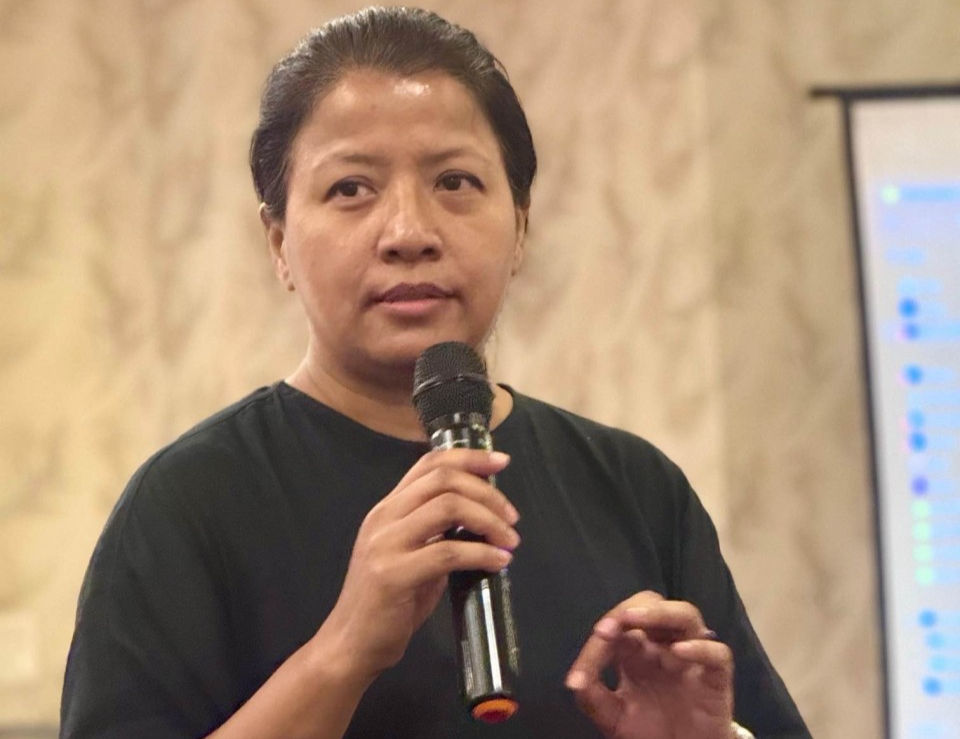
In a world where cities are often designed on paper before they are understood in reality, Urmi Buragohain chose to listen first.
Trained as an urban planner and architect, Urmi’s journey took her across Australia, Qatar, and India—exposing her to diverse landscapes, systems, and approaches to design. Yet, it was her return to Northeast India, to the layered cultural and ecological richness of places like Imphal, Manipur, that truly reshaped her purpose.
She began to notice something deeply unsettling.
Spaces were being built, but people were being left out.
Communities were being mapped, but their stories were missing.
Data was being collected, but lived experiences were being erased.
What she saw was not just a gap in planning—it was a gap in empathy.
This quiet but persistent discomfort became the seed for something transformative. In 2018,
Urmi founded Place Making Foundation, not as a conventional design firm, but as a
movement—one that challenged the very idea of who gets to design a city.
At its core, the Foundation is built on a powerful belief that communities already hold the wisdom to shape their own futures.
From Designing Spaces to Designing with People
Urmi’s work is not about imposing solutions—it is about uncovering them from within.
Through her concept of “situated imagination,” she redefines design as a collective act—where memory, emotion, and local knowledge become as important as technical expertise. Her approach moves beyond blueprints and into lived realities, where design becomes a dialogue rather than a directive.
One of her recent initiatives in partnership with Reclaim Guwahati – Dighalipukhuri Chapter is Gosor Golpo (Tree Tales) beautifully captures this philosophy.
Trees—often seen as passive elements of urban infrastructure—are reimagined as living archives of memory and identity. Communities engage with them not just as environmental assets, but as carriers of stories, belonging, and shared responsibility.
In these moments, design transforms.
A tree becomes a storyteller.
A space becomes a memory.
And a community becomes the author of its own narrative.
The Invisible Challenges of Meaningful Work
But this path has not been easy.
Working at the intersection of community, culture, and design often means stepping outside
conventional systems. Urmi has had to constantly advocate for ideas that are not always
immediately measurable proving that stories are data, that memory is knowledge, and that care is a form of infrastructure.
Building trust has been one of her greatest challenges—and her greatest strength.
Trust that communities will open up.
Trust that their voices will be valued.
And trust that these voices can shape real, lasting change.
Sustaining a not-for-profit model rooted in slow, participatory work has required resilience,
patience, and an unwavering belief in purpose.
Quiet Breakthroughs, Lasting Impact
Unlike traditional success stories, Urmi’s milestones are often subtle—but deeply powerful.
They are found in moments where:
A community begins to see its own story reflected in a design
A public space finally feels like it belongs to the people who use it
A tree is no longer overlooked, but protected as a shared memory
These are not just design outcomes—they are shifts in ownership, dignity, and identity.
Her work has also received wider recognition, including being acknowledged as a Climate Parent Fellow in 2025, a leading women-led startup in Northeast India in 2021, and her participation in the prestigious Academy for Women Entrepreneurs (AWE) Program by the U.S. Department of State. Her efforts in partnership with Imphal Smart City Limited contributed to Imphal being ranked among the top 15 cities in India under the Streets for People Challenge in 2021—a testament to how local voices can shape national narratives.
An Entrepreneurial Journey Rooted in Empathy
For Urmi, entrepreneurship has never been just about building an organisation—it has been a
deeply personal journey.
A journey of questioning.
Of unlearning.
Of choosing empathy over assumption.
It has taught her that the most meaningful solutions do not come from authority, but from
understanding. That when we slow down and truly listen, we begin to see what has always been there—waiting to be acknowledged.
Her journey reflects resilience in uncertainty, strength in vulnerability, and clarity in purpose.
A Message for Every Woman
To every woman who dreams of creating change, Urmi’s words carry both simplicity and power:
You do not need permission to start.
Your perspective matters. Your questions matter.
And sometimes, the most meaningful work begins not with answers—but with the courage to ask better questions.
Because Design is Not Just About Spaces—It’s About Belonging
Urmi Buragohain’s story is a reminder that when we design with empathy, we do more than
build infrastructure—we create connections.
We create spaces where people feel seen.
Where memories are honoured.
Where dignity is restored.
And in that belonging, something extraordinary happens—
communities don’t just exist… they thrive.


Comments